In today’s digital era, digital transformation is essential for sectors like dentistry in Indonesia. The integration of digital technology promises a revolution in how dental practices operate, offering significant potential to enhance treatment quality, operational efficiency, and the overall patient experience. Dental education institutions in Indonesia and the Indonesian Dental Association (Persatuan Dokter Gigi Indonesia – PDGI) increasingly recognize this urgency, driving the adoption of digital technology as a strategic step toward a better future for dental practice.
Digital transformation offers many benefits to Indonesian dentistry. Improved diagnostic accuracy is a key advantage, with digital imaging like radiography and Cone Beam Computed Tomography (CBCT) providing detailed visualizations of dental structures. Workflow efficiency is enhanced by intraoral scanners, replacing time-consuming conventional impressions. Digital data also improves communication between dentists, patients, and labs. Digital treatment planning allows outcome visualization, increasing patient trust in complex treatments like implants and orthodontics. Overall, digital technology can improve the patient experience, making visits more comfortable and informative.
One of the first steps in digitalization is the use of intraoral scanners in modern Indonesian clinics. This technology is more comfortable for patients than conventional impressions. Intraoral scanners also produce accurate digital models, enabling efficient digital workflows with labs.
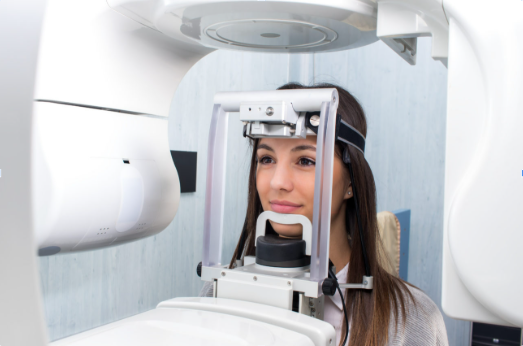
For diagnosis, digital imaging, including radiography and Cone Beam Computed Tomography (CBCT), is crucial. In implant planning, common in Indonesia, CBCT provides accurate 3D views of jaw structures, enabling safer, precise procedures. More clinics and hospitals in Indonesia are using digital imaging, showing awareness of accurate diagnosis.
Digital treatment planning with specialized software improves communication with patients. Indonesian dentists use this technology, especially for implants and orthodontics, to visualize treatment outcomes, building patient trust.
The potential of 3D printing in Indonesian clinics and labs is notable. It allows faster, more accurate production of study models and surgical guides, and potentially temporary restorations. Though not yet widespread, some urban clinics and labs use 3D printing for personalized, efficient benefits.
However, the implementation of digital technology in Indonesian dentistry is not without its challenges. The initial investment costs for digital equipment and software can be a significant barrier, especially for practices in areas with limited resources. Furthermore, the need for adequate training for dentists and staff is crucial to ensure that this technology is utilized effectively. Infrastructure disparities and internet connectivity issues across different regions of Indonesia are also important considerations for the equitable adoption of digital technology.